
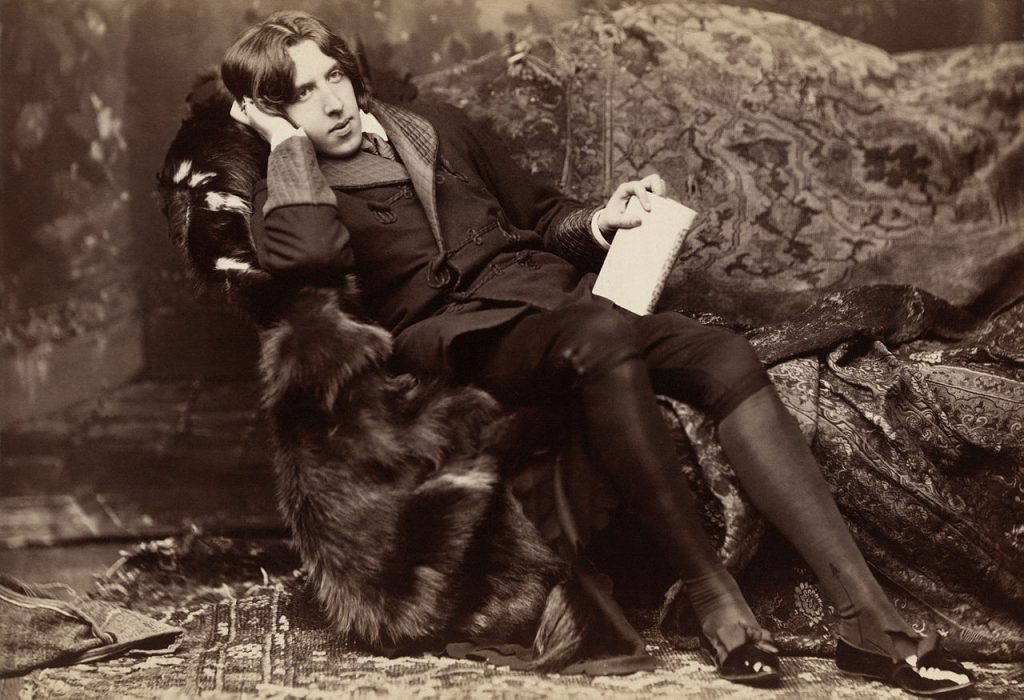
In his 1887 short story The Canterville Ghost, Oscar Wilde said of our transatlantic cousins, “We have really everything in common with America nowadays except, of course, language”. Similar, albeit unverifiable, statements have been attributed to George Bernard Shaw and Winston Churchill.
I am often reminded of this witty remark from the self-styled Irish genius when proofreading for clients from around the world, whether from English- or non-English-speaking countries.
One’s own form of language or, in the case of the US, for instance, cultural context inevitably plays a part in how English, beyond the land of William Shakespeare, is written. Indeed, in nearly three decades as an editor and proofreader, certain styles, structures or phrasing in written English seem, to me at least, specific to the country of the writer in question, while others appear to be transnational in terms of usage.
True, there is no science here, beyond my anecdotal observations. To fully explain whatever phenomenon is going on here, one would need to investigate the different ways in which English is taught around the world, both in terms of curricula and teacher personalities, as well as which English-language texts are the most popular with foreign writers of English: in short, a mammoth, even impossible, task for any cohort of researchers.
For now, I would like to share some of the issues that I frequently come across in my proofreading work (including from the US). My intention here is not to enforce or, conversely, challenge the hard and fast rules of grammar, syntax etc. Rather, I am offering suggestions with a view to transforming awkwardly constructed English into something much more accomplished.
Allow
Use of the verb ‘allow’ is prevalent in academic papers I am asked to proofread, no matter where the authors come from. Typically, in this context, ‘allow’ is intended to mean ‘make possible’ or ‘enable’. Often, in English, especially when writing academic or other formal kinds of text, there is a tendency in many of us to use a more highfalutin word or, at least, a word that is less ordinary and conversational. Allow, in the aforementioned sense, is a bit of an oddball, in that it is an ‘ordinary’ word, but it is not the most appropriate, given that it can lead the author to construct a sentence that is less impactful and distracts from the information it is intended to convey:
- Our research allowed to support our hypothesis (false)
- Our hypothesis was supported by our research (true)
Abbreviations
As a proofreader, the main issue I come across regarding abbreviations is (the lack of) consistency. Here are a few suggestions:
- If you are to use an abbreviation, make sure that it appears in brackets after the first appearance of the full wording, e.g., the British Broadcasting Corporation (BBC) or the National Health Service (NHS). After that, only use an abbreviation in the main body of the text. Stylistically, it is acceptable to use the full wording in headings, provided that the abbreviation and commensurate full wording are not used interchangeably.
- Avoid abbreviating prepositions or using lower-case letters unless it is appropriate, e.g., the IoT for the Internet of things, but UCLA for the University of California, Los Angeles.
- Be sparing with abbreviations, especially in short papers. For example, don’t use an abbreviation if it only appears once or twice, and never introduce an abbreviation if you are never going to use it afterwards.
Basically
This is very much a personal matter for me. The word ‘basically’ is ubiquitous in British English, especially spoken English. Its usage often indicates that the writer or speaker is about to convey something complex in simple terms. This can be a hostage to fortune. I also think ‘basically’ is a rather dull word, which suggests that what is being conveyed is boring. My advice is to use ‘essentially’ instead.
STOP SHOUTING!!!
Writing an academic paper or company report is not like writing a post on Twitter or Facebook. In other words, avoid the copious use of exclamation or question marks for emphasis, and never use ALL CAPS. Instead, try a subtler approach, such as the minimal use of italicization, e.g., I want this one, not that one (instead of I want THIS one, not THAT one!!!).
It endlessly fascinates me how writers from certain countries always precede years with the phrase ‘in the year (of)’ when writing in English. I am sure this reflects the way in which their native language is structured. Simply put, never use ‘in the year (of)’ before a year or a period of years.
Comprise
This verb foxes so many writers, including those with a PhD whose first (and perhaps only) language is English. In any of its verbal forms, ‘comprise’ is never followed by ‘of’. My hunch is that many folk confuse ‘consist’ with ‘comprise’ (this collection consists of the complete works of Shakespeare, but that collection comprises the complete works of Charles Dickens).
Oxford comma
Ah, the Oxford (or serial) comma. So beloved by writers of American English, but all too often unnecessarily applied, including for unintentional comedic effect. That said, using the Oxford comma is generally a matter of personal style, provided that there are no unintended consequences. My own view is that long sentences without any form of punctuation should be avoided: think of the comma in terms of taking a breath when you read out a sentence.
British or American English?
This is fitting note on which the end the blog. Personally, I find the differing forms of English to be fascinating, as any language needs to evolve in line with changes in society, culture etc. The Oxford English Dictionaries website covers the topic well. All I will say for now is that you need to make sure that the proofing language you use is the same as that required by you or your publisher.
I hope this has been useful to readers and, better still, writers of English. If you have any questions or want to know more about our academic and business proofreading and editing services, please email me.
Dr Stephen Gregson
Co-founder and Chief Proofreader & Editor
Language and Culture